
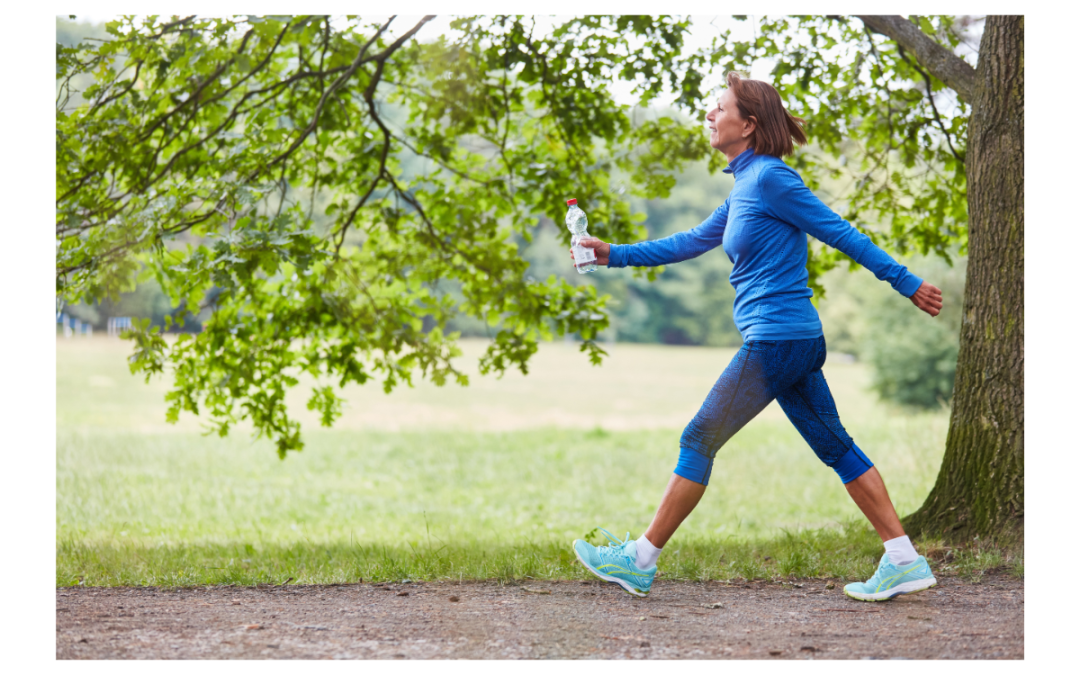
Have you ever glanced at your phone before bed and feel that little pang of guilt because you only hit 8,000 steps? Yeah, me too.
Somehow, 10,000 steps became this magic number we’re all supposed to hit. Like if we don’t reach it, we failed the day. Hit it? Gold star. Miss it? Well, guess you didn’t try hard enough.
But here’s what nobody tells women in midlife: 10,000 steps isn’t magic. It never was.
Once you understand where that number actually came from, what the research really shows, and how your body’s needs shift during menopause, it changes everything, how you think about walking, exercise, all of it.
And honestly? That matters. Because guilt is a terrible motivator for anything, let alone your health.
So Where Did This 10,000-Step Thing Even Start?
You’d think it came from some groundbreaking study, right? Nope.
It started in Japan back in the 1960s as a marketing gimmick for a pedometer. The device was literally called the “10,000-step meter.” They picked that number because it sounded good and was easy to remember, not because science said it was the perfect amount.
But it stuck. Fitness trackers adopted it, health campaigns touted it, and eventually, research showed that moving more is better for your health. Duh!
That doesn’t mean 10,000 is some biological finish line your body needs to cross every single day.
What the Research Actually Shows
When you look at the big studies tracking people with wearables, here’s what comes up: more steps generally mean lower risk of dying early, heart disease, certain cancers, and even dementia.
But it’s not black and white. It’s more like a sliding scale.
For Women in Midlife (40s-60s)
Studies of middle-aged adults found that getting around 7,000-8,000 steps a day was linked to a 50-70% lower risk of dying early than barely moving at all.
And yes, benefits continued to increase as people walked more, somewhere between 8,000 and 12,000 steps. But there wasn’t some dramatic cliff at 10,000 where everything suddenly changed.
Translation? Most of the big health wins happen way before you hit 10,000.
After Menopause: Heart Health and Longevity
Once menopause hits, heart disease risk goes up because of hormonal changes. But even moderate movement makes a real difference.
Research on postmenopausal women shows:
- Around 4,400 steps a day already lowers your risk compared to being super sedentary
- Risk keeps dropping as you walk more, then levels off around 7,500 steps
- Even hitting 4,000 steps just once or twice a week helps with heart health and longevity compared to never reaching that
This is huge for women who feel defeated because their energy’s shot, their knees hurt, or they just don’t have time for long walks every day.
Consistency beats perfection. EVERY TIME!
Where Walking Alone Isn’t Enough
Here’s where it gets tricky.
Walking is fantastic for your heart and longevity. But when it comes to weight and body composition after menopause? Walking by itself often isn’t enough.
Studies show:
- 10,000 steps a day doesn’t always budge the scale or your waist measurement
- Women who average closer to 12,000-12,500 steps tend to have healthier body composition
- Walking doesn’t fully counteract the hormonal shifts messing with fat storage, insulin, and muscle loss
This is why so many women tell me, “I walk all the time, and nothing’s changing.”
You’re not doing anything wrong. You’re just missing a piece of the puzzle.
Why Strength Training Becomes Non-Negotiable
If walking is your foundation, strength training is what holds everything together in midlife.
1. Metabolism and Weight
Muscle burns more calories than fat, even when you’re just sitting around. As estrogen levels drop, your metabolism naturally slows, but lifting weights helps counteract this.
Research shows strength training:
- Reduces belly fat
- Improves how your body handles insulin
- Makes losing weight (and keeping it off) way more doable than cardio alone
2. Muscle Loss
Menopause speeds up age-related muscle loss. But here’s the good news: muscle responds to training at any age.
Studies show:
- Resistance training triggers muscle growth even after menopause
- Women in their 40s, 50s, and 60s can maintain—and even build—muscle
- Postmenopausal women might need a bit more volume (more sets) to see changes, but it absolutely works
3. Bone Density
In the years around your final period, you can lose a scary amount of bone mass.
Weight-bearing exercises—squats, deadlifts, presses, carries—put healthy stress on your bones, telling them to stay strong or even get stronger.
This isn’t about lifting heavy to show off. It’s about building a body that’ll support you for the next 30, 40 years.
So… Do You Actually Need 10,000 Steps?
Nope.
Think of 10,000 as a helpful guideline, not a rule or some magic cutoff.
Real health benefits start way below that. Going from barely moving (2,000-3,000 steps) to moderate activity makes a massive difference. Beyond that, sure, more is better, but the returns start to diminish.
The number itself isn’t the problem. Treating it like a moral test is.
What This Looks Like in Real Life
For women in midlife and menopause, here’s what actually works:
- Shoot for 7,000-8,000 steps most days for solid heart health and longevity benefits
- Gradually add more steps if weight or energy is a goal, but don’t force it
- Add strength training 2-3 times a week
- Focus on being consistent, not perfect
- Pick movement you actually enjoy
A simple approach:
- Track your current average
- Add 1,000-2,000 steps over time
- Layer in weight training twice a week
- Let progress guide you, not pressure
The Bottom Line
Midlife health isn’t about hitting some perfect number every day.
It’s about supporting your body through change, with movement that builds strength, protects your bones and heart, and actually fits into your real life.
10,000 steps? Sure, it can be a useful target. But your health doesn’t hinge on hitting it daily.
What really matters is this: you keep moving forward, literally and figuratively.
If you’re tired of guessing and ready to build a movement plan that works with your hormones, metabolism, and energy right now, personalized support makes all the difference.
Schedule a Coaching Call with me today and get on track with a healthy lifestyle that works for you!
Your body isn’t asking for more pressure. It’s asking for a different approach
And you’re absolutely allowed to give yourself that.